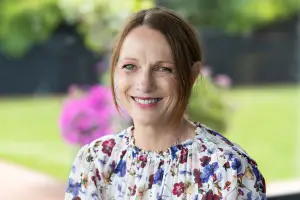
By Libby Carson
Most people assume being a celebrant is a very social job. In reality, much of it is done alone.
On the surface, it looks like a very people-focused role. We’re present at some of the most significant moments in people’s lives, weddings, funerals, memorials, and we’re often right in the middle of it all. But the reality is that much of the work happens on our own. The writing, the preparation, the emotional processing, the admin, it’s largely done without a team around us.
We step into people’s lives for a short period of time, often quite intensely, and then we step out again. There isn’t always a natural debrief, and there’s rarely a colleague sitting nearby to share the load or talk things through. Over time, that can feel isolating, even for those of us who are very comfortable working independently. For those of us who are naturally people-focused, it can feel even more pronounced at times.
At the same time, we are part of a wider community of celebrants. And that comes with its own complexity.
In practical terms, we are often in competition with one another. We’re working in the same regions, connecting with the same funeral directors, and responding to the same enquiries, often, at times, vying for space when that wedding enquiry lands or a family begins their search. The work is personal, and the pathways to it are often similar. It’s not unreasonable that this can create a level of caution; about how much to share, how visible to be, or even how much to engage.
I think, if we’re honest, that can sometimes shape how we show up.
There can be a hesitation to step forward for a branch committee, or to reach out and ask for advice. At times, even the idea of building genuine connections with other celebrants can feel complicated, as though it might come at a cost. Not because people aren’t generous, but because the environment can feel competitive.
And yet, when you step back, that thinking doesn’t quite hold.
No two celebrants offer the same experience. Our backgrounds, personalities, writing styles, and the way we interact with families are all different. But the truth is, people don’t always choose a celebrant for neatly defined reasons.
Sometimes it comes down to a recommendation.
Sometimes it’s timing or availability.
Sometimes it’s as simple as liking the look of someone’s website, or a feeling they get when they read a profile.
Much of it sits outside our control.
And perhaps that’s the point.
When you accept that not every enquiry is yours to win—or lose—it takes some of the pressure out of the comparison. It becomes less about competing, and more about being the right fit when the alignment is there.
From that place, it’s easier to see other celebrants not as competitors to keep at arm’s length, but as peers who understand the work in a way very few others do. People you can learn from, refer to, and lean on when needed.
That’s where organisations like Celebrants Aotearoa play an important role. They create a space where celebrants can connect in a way that sits outside of day-to-day competition. It’s a place to share experiences, ask questions, and learn from each other. It also offers a way to be involved, whether that’s contributing to a branch, joining a committee, or simply being part of the conversation, in a way that feels constructive rather than transactional.
There’s something reassuring in knowing that we can refer work to one another when it’s not the right fit, or when we’re unavailable, without it feeling like a loss. In many ways, that kind of collaboration strengthens the profession. It sets a standard that this is not just about individual bookings, but about ensuring people have the right person beside them for their moment.
And then there’s the role itself.
As celebrants, we are an important part of the day, but we are not the focus of it. If anything, we are at our best when we are barely noticed. Not invisible, but not dominant either. The measure of a good ceremony is not how memorable the celebrant is, but how meaningful the experience is for the people at the centre of it.
If people walk away remembering how they felt, the stories they heard, and the connection they experienced, then the job has been done well.
It’s an interesting balance. We bring skill, structure, and presence to something that matters deeply, but we do it in a way that doesn’t centre ourselves. And then we move on to the next family, the next couple, the next story.
Perhaps that’s why connection with other celebrants matters more than we sometimes acknowledge.
Because while the work may be individual, it doesn’t need to be isolating—and the more willing we are to show up for one another, the stronger the profession becomes for everyone.
Libby Carson is a Wellington-based celebrant, specialising in personalised weddings and farewells. She is a member of Celebrants Aotearoa, sits on the National Executive, and was recently appointed a VCANZ celebrant.